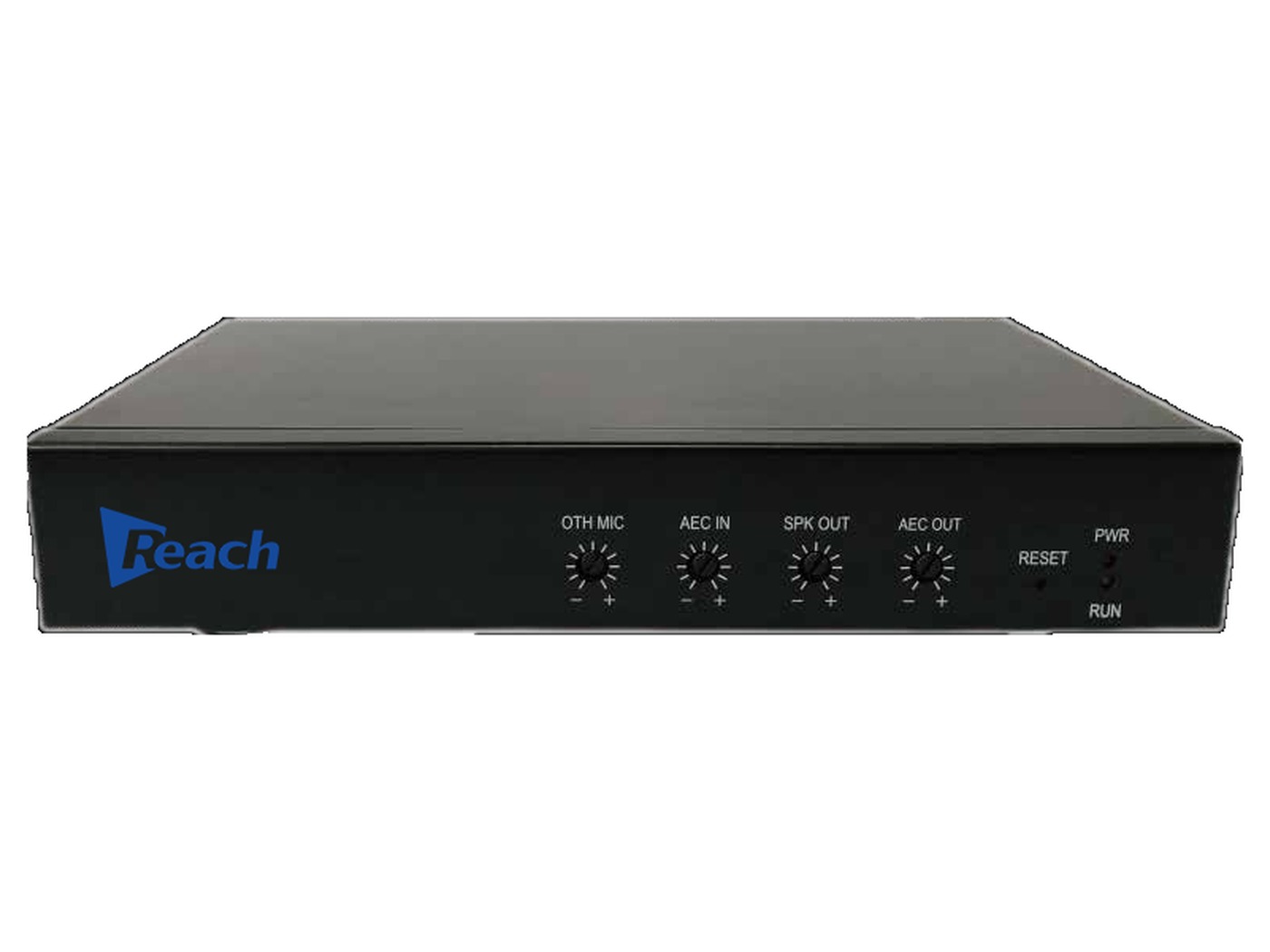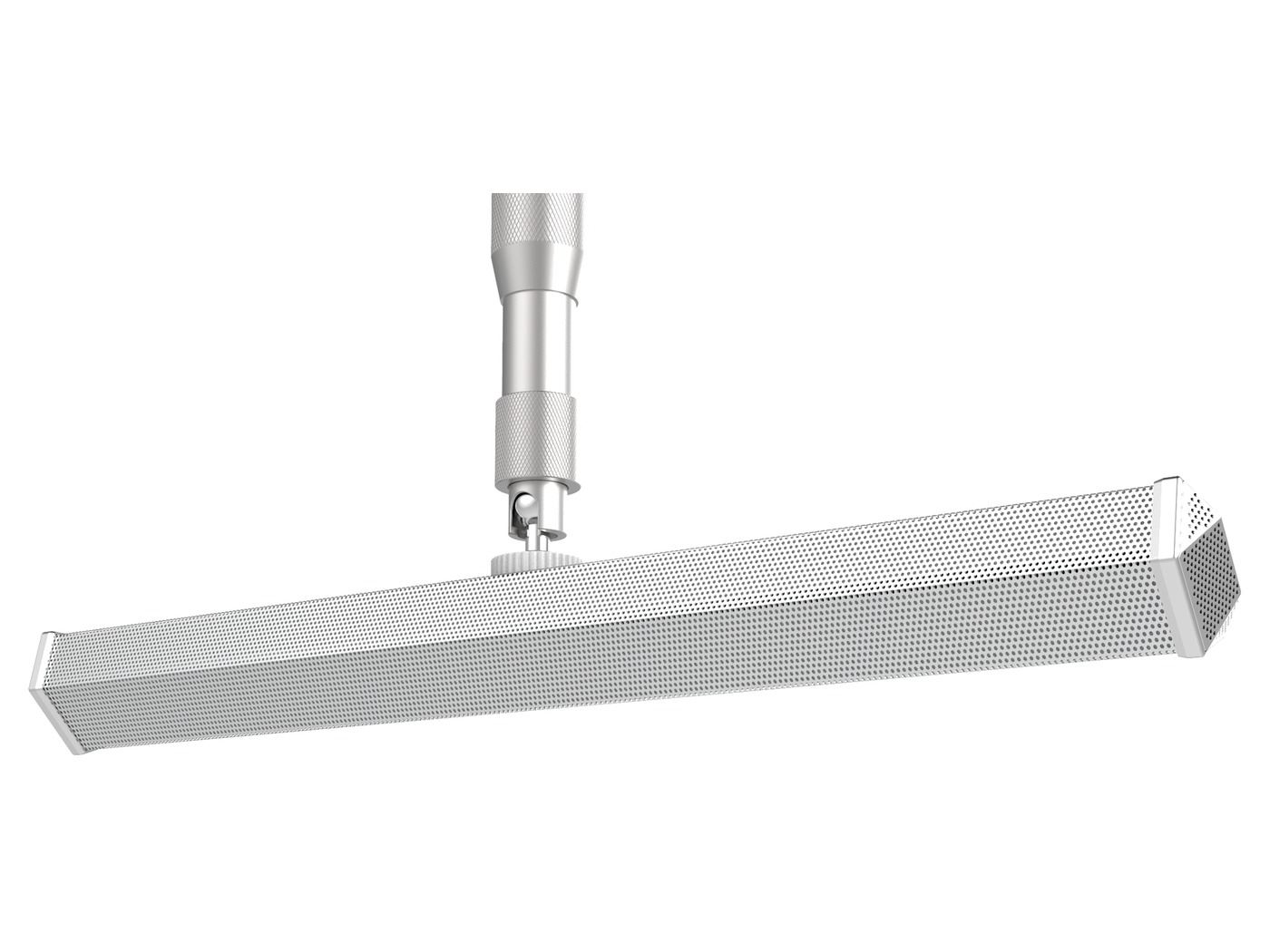

A classroom sounds right when two things happen: the teacher’s voice reaches every seat without a microphone clipped to a collar, and the students’ questions reach the recording and the remote class. The Reach audio solution does both with three pieces. The ACM600 six-array ceiling bar covers the teaching zone, the ACM100 omni microphone picks up the student area, and the TAP800 zone DSP reinforces the voice, cancels echo and feeds the recorder.
Because the TAP800 is a zone processor, sound is reinforced where it is needed instead of everywhere: teachers speak normally, neighbouring classrooms are not disturbed and the acoustic feedback that troubles simple PA systems is suppressed. For larger rooms the same architecture scales to the TAP3200 32-microphone ceiling array or the TAP9000 129-microphone array; for interactive classrooms the TAP644 works with the ACM702 array.
Hands-free for the teacher
Acoustic curtain wall technology reinforces the voice in a defined zone — no lavalier, no body pack and no battery to change.
Student voice captured
The ACM100 omni microphone covers the student area, so questions from the back row reach the recording and the remote audience.
No echo, no howling
AEC, AFC and AI noise reduction run inside the TAP800, keeping the room stable at higher gain than a conventional PA.
Zone reinforcement
Sound is aimed at the listening area rather than sprayed across the building, which keeps neighbouring classrooms quiet.
From classroom to lecture hall
The same architecture scales to the TAP3200 (32 microphones, beamforming, Dante) and the TAP9000 (129 microphones) for large halls.
One feed for record and conference
A line output feeds the TKR5000S or CL560 recorder and the video conference codec, so remote students hear the room the way it sounds.
The audio chain is local, short and analogue where it matters. The ACM600 bar and the ACM100 omni microphone feed the TAP800, which drives the ceiling speakers for local reinforcement and sends a clean line output to the media processor. The processor records or streams the session, and the Flow Campus platform publishes it as live or VOD content.
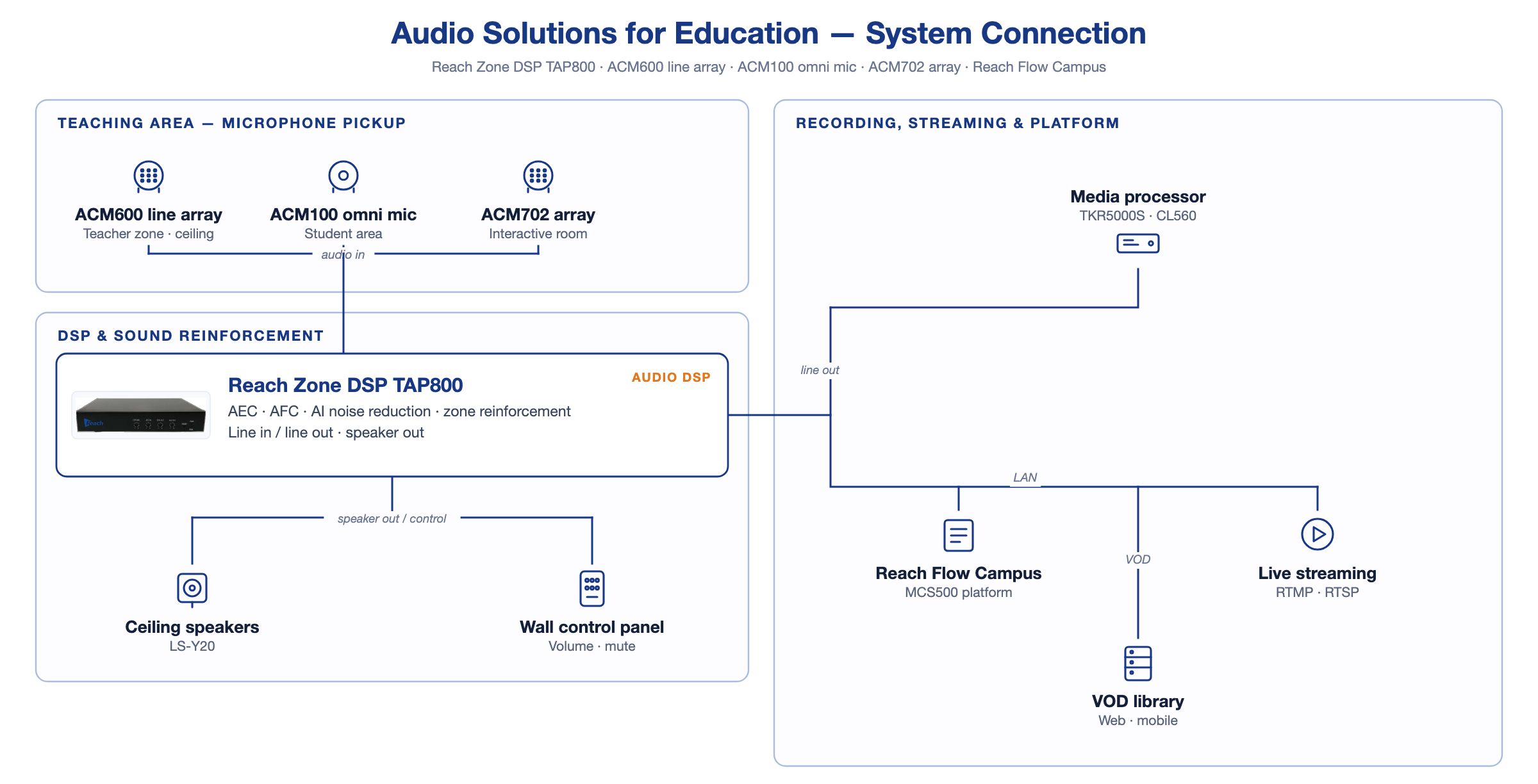
System connection — microphone pickup into the TAP800 zone DSP, local reinforcement and the line output to the recording and streaming layer
| Model | Role | What it does |
|---|---|---|
| TAP800 | Zone audio DSP | AEC, AFC and AI noise reduction with zone sound reinforcement; line in / line out and speaker output for the classroom. |
| ACM600 | Line array microphone | Six-array ceiling bar covering the teaching zone; the teacher needs no body pack. |
| ACM100 | Omni microphone | Student-area pickup, daisy-chained into the TAP800 for questions and discussion. |
| ACM702 | Array microphone | Ceiling or table array for interactive classrooms with two-way audio. |
| TAP3200 | 32-microphone ceiling array | 10 m+ omnidirectional pickup, beamforming and noise reduction with Dante output. |
| TAP9000 | 129-microphone ceiling array | Large halls and auditoriums: 10 m+ radius, ClearVoice AI and dynamic beamforming. |
TAP800 — zone audio DSP
ACM600 — line array microphone
One ACM600 bar above the teaching area and one ACM100 in the student area are enough for a normal classroom: the teacher speaks at a natural level, the back row hears clearly and the recording carries both sides of the dialogue.
Large rooms use the TAP3200 or TAP9000 ceiling arrays, which pick up a speaker from more than ten metres, steer a beam to the voice and reject air-conditioning noise, so a lecture recorded at the back of the hall still sounds close.
When a remote class joins, the TAP644 audio processor works with the ACM702 array to keep two-way audio in sync with the video, so remote students can interrupt and be heard without the teacher repeating the question.
The line output feeds the media processor and the codec at the same time. One room, one audio system and one clean feed — no second set of microphones for the recording.
 Tel:+86 13265602904