
A doctoral seminar where the speaker, the slides and the discussion all have to survive the recording.
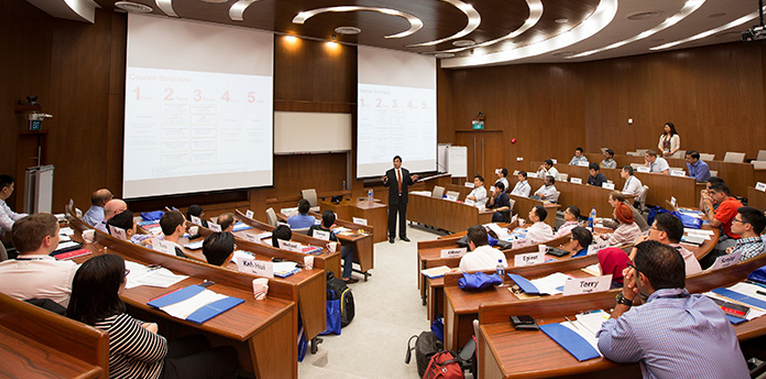
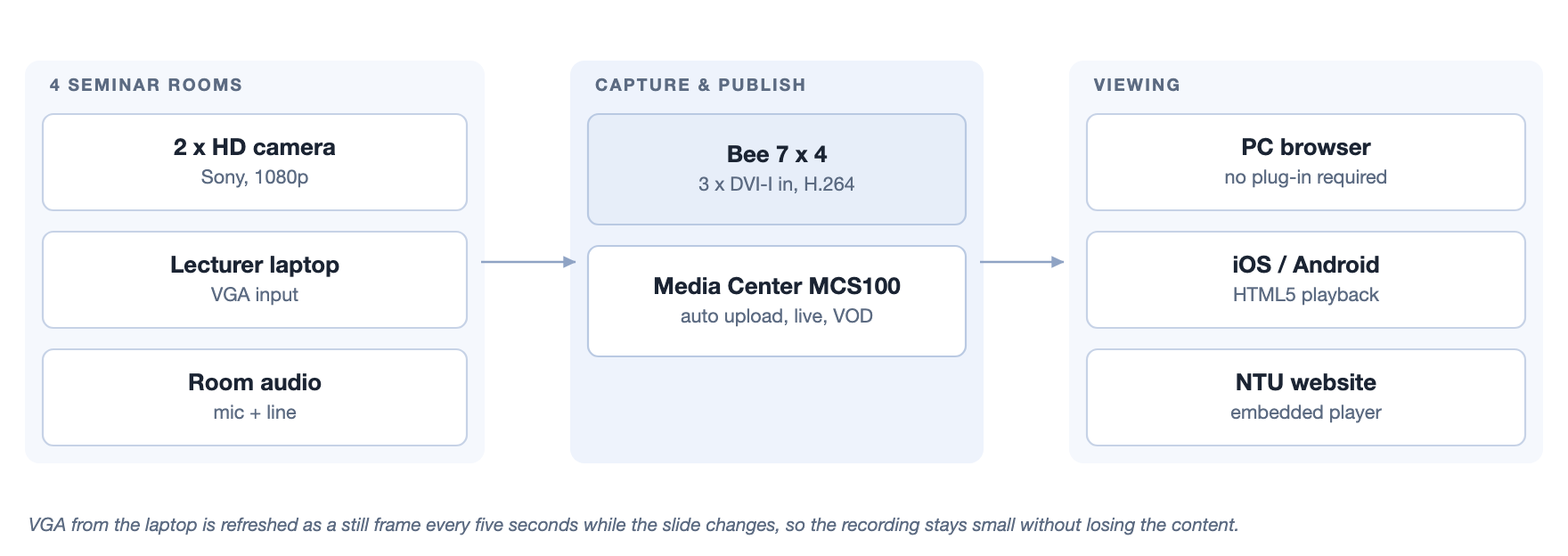
IGS brings PhD students from every school at NTU into interdisciplinary research seminars, and it wanted those seminars recorded as a matter of course. The requirement was specific: two HD camera angles plus the lecturer's laptop plus room audio had to appear together on one screen; viewers had to be able to drag between streams while watching live or on demand; recordings had to play on phones; files had to be downloadable for replay and publishable on the NTU website.
Four Bee 7 recorders, one per seminar room, each with three DVI-I inputs. Two carry 1080p video from the room cameras; the third takes the lecturer's laptop over VGA, captured as a still frame refreshed every five seconds while the slide actually changes — so the presentation is legible without inflating the file. Audio arrives on the analogue input. Each recorder writes a single file and pushes it to Media Center, where it is stored, streamed and served on demand.
| Product | Model | Quantity |
|---|---|---|
| Bee 7 | BEE7 Pro | 4 |
| Media Center | MCS100 | 1 |
 Tel:+86 18589023158